

How to Verify Social Media Videos During Breaking News: A Practical Guide
A step-by-step method for confirming viral footage during a breaking story: reverse image searches, geolocation, chronology checks, and how to approach the person who posted it.
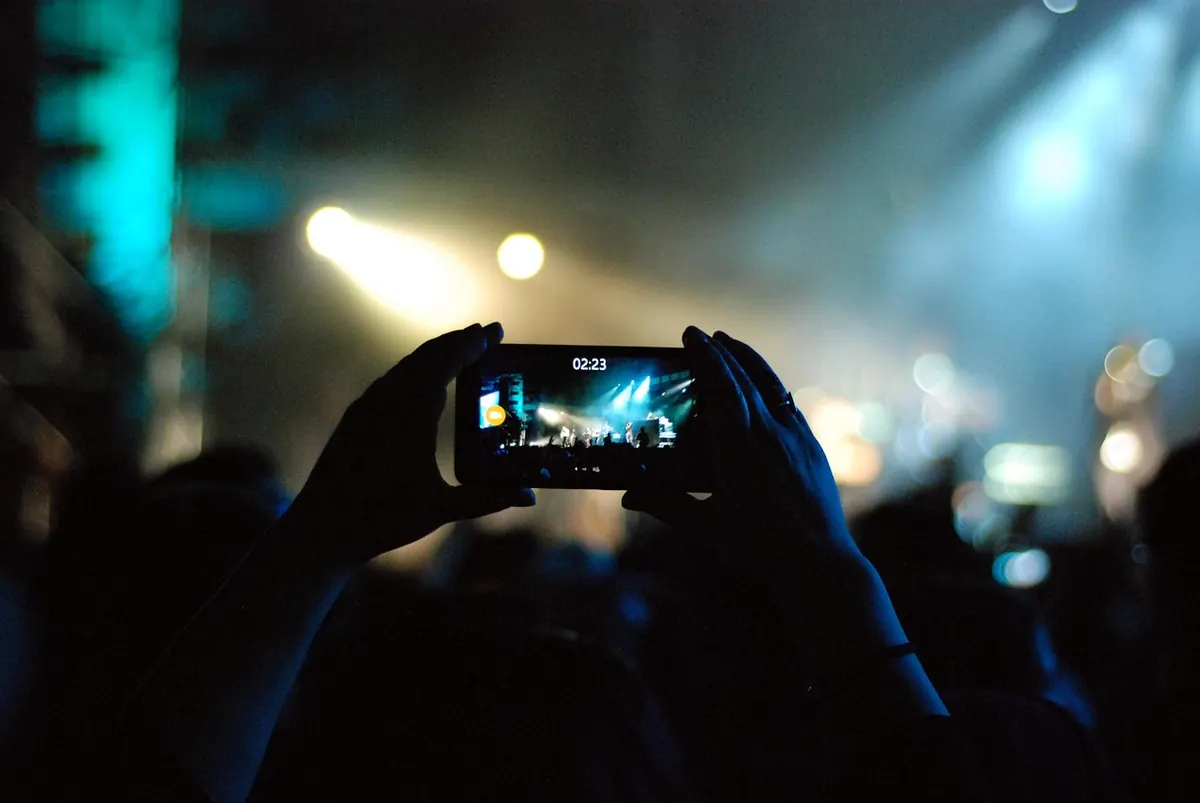
Somewhere a bridge is down, a street is on fire, a crowd is running. The first clips are already in your feed, and the caption underneath says what everyone wants to believe: this is happening now. Sometimes it is. Often it is footage from another country, another year, or another disaster entirely, reposted by someone who may not even know they are wrong. Verification is not mysterious. It is a handful of habits, done in order, under time pressure. Here is the sequence that works when the clock is running.
First, Stop and Take Stock
Before you open a single search tab, save the evidence. Screenshot the post as it appears, with the handle, timestamp and caption visible, and paste the URL into a document. If the platform allows a download, keep the original file rather than a screen recording: the resolution will be better for close inspection, and the file may still carry useful data.
Then write down, in one sentence, what the clip is being used to claim. Protesters storm the parliament building in a named city, this morning. That sentence is your test, because it tells you what to check: the place, the event, the date. A clip can be entirely real and still fail every part of it.
Note too where you first saw it and the earliest account you can find posting it. That account is a starting point, not an answer.
Reverse Image Search, Done Properly
Choose frames that give search engines something to grip
A dark, shaky frame of a crowd will return nothing useful. Scrub to a moment with a recognisable building, a sign, a vehicle, a skyline. Take three or four stills from different points in the clip, crop out captions, stickers, channel logos and play-button overlays, and search each one separately. Google Lens, Bing Visual Search, Yandex and TinEye do not return the same results; use at least two of them.
Search around the video, not only for it
Full-video reverse search is unreliable, so work the edges. Paste distinctive phrases from the caption into a search engine, with and without quotation marks. Translate those phrases into the local language of the place being claimed and search again. On YouTube, sort results by upload date and hunt for the oldest version; on X, use the date filters in search. If the clip turns up inside a compilation posted months ago, you are finished: you have found a recirculation.
No results is not proof of anything. Genuinely new footage often leaves no footprint at all in the first hours.
Geolocation: Find the Exact Spot
Open satellite imagery of the claimed city and get your bearings first: the river, the main road, the rail line. Then return to the footage and hunt for anchors. A shop sign in a particular script, a distinctive lamp post, the shape of a rooftop, a bridge with a certain number of arches, hills on the horizon. Cross-check candidates in street-level imagery and mapping tools, and in ordinary photo results for the neighbourhood.
Small details settle arguments
- Road markings, kerb colours and the direction traffic flows
- Utility poles: their shape, height and the way wires are strung
- Number plates, including their layout and script
- Shop brands that exist in only one country or region
- Religious architecture, and what is conspicuously absent from the skyline
- Terrain: the slope of a street, a coastline, the lie of the land
Shadow direction and length can support a hypothesis about time of day, but only if you are confident of the date and careful with the geometry. Treat it as corroboration, never as proof. What you want in the end is a match you can describe out loud: the camera is on the east side of the square, at the corner by the pharmacy, facing north.
Chronology: Is It Even From Now?
Old footage resurfaces in every crisis, so attack the date from several angles at once.
Weather is the fastest filter. If the claim is "today" and the trees are bare while the region is in high summer, or the street is dry during a documented downpour, keep digging. Historical weather records are easy to find for most places. Vegetation, snow and the quality of light are crude tools, but they are quick.
Then look at the built environment. Buildings still under construction in the clip that were finished years ago, a shop chain that has since rebranded, a stadium before renovation. Older mapping imagery and local news archives help here.
Interrogate the account, without letting it decide for you. A profile created last week that has posted only this clip is a warning. So is an account that normally posts about football and has suddenly posted war footage. If you have the original file, check its metadata; platforms often strip it, so missing data is normal and never evidence of fakery on its own.
Talk to the Person Who Posted It
Assuming the poster is a real person rather than an aggregator, a short, polite message works better than an interrogation. Say who you are, what you are trying to establish, and ask whether they filmed it themselves. Then ask things that produce checkable answers:
- Where exactly were you standing when you started filming?
- What happened in the minutes before and after the clip?
- Do you have the original file, without filters or edits?
- Did you see anything that is not in the footage?
- Could you send one more photo of the same street, taken now?
Asking for a detail only a person on the spot would know is fair. Turning the conversation into a trap is not, and it usually ends the exchange. Keep two things in mind: being present does not make someone accurate, and being far away does not make someone wrong.
Consent and safety outrank a scoop. People in danger should not be pressed for interviews, and private individuals should not be named or exposed without a strong reason. If someone declines to talk, say so in your copy rather than working around them.
Keep a Log, and Say What You Don't Know
Maintain a simple document with three headings: confirmed, unconfirmed, contradicted. Under each, one line and the reason. Confirmed: location. The blue awning and the church tower match street-level imagery at the junction. It feels dull and it will save you. When someone asks how sure you are, you will have an answer instead of a feeling.
Then let your language carry the uncertainty. "Footage posted online appears to show" and "the location has been confirmed, the date has not" are honest and precise. Readers forgive a gap that is named. They do not forgive a gap dressed up as fact.
A Ten-Minute Checklist for the First Hour
- Save the post, the URL and the original file; note the earliest account you can find.
- Write the claim as one sentence and test each part of it.
- Pull three clean frames, crop the overlays, run two reverse image searches.
- Search the caption in the local language, sorted by oldest result.
- Find two anchors in the footage and match them on satellite imagery.
- Check weather and the built environment against the claimed date.
- Message the poster with three specific questions.
- Write down what you know, what you do not, and why.
If a clip survives that, you can publish it with a plain description of what has been established, and just as importantly, what has not.
Photo: Pexels / Pixabay